THE INTRODUCTION
WORKSHEET
REFLECTION
THE INTRODUCTION
reflection WORKSHEET

This worksheet is here to help you reflect on the content explored during
THE INTRODUCTION psychoeducational group. Please remember to reflect at the pace that feels right for you.
At the bottom of this page, you will find all slides used, scroll down and save as needed.
“Awareness reveals the adaption, and that creates agency.”
REVIEW BEFORE REFLECTION
-

Predictive Processing & Allostasis
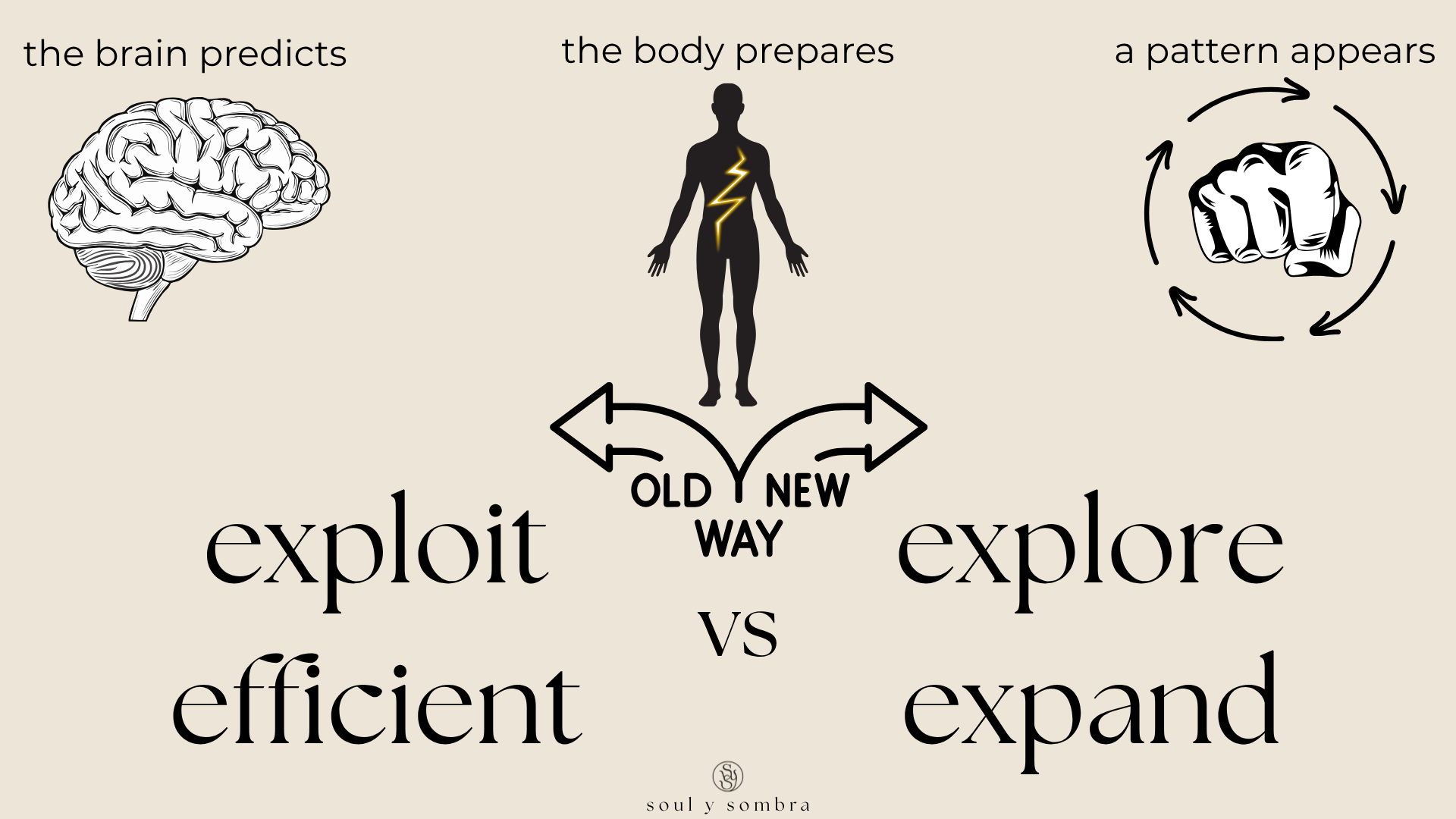
Your brain doesn't just react to the moment; it predicts it, priming your body to respond before anything's even happened, all in the name of saving energy. That means a response can look completely irrational for the situation while being perfectly rational to your brain's energy budget. Coherence to the moment was never the goal, survival and efficiency were. The good news: these predictions were learned from real experience, which means they can be updated with new experience too.
-

Autonomic Nervous System
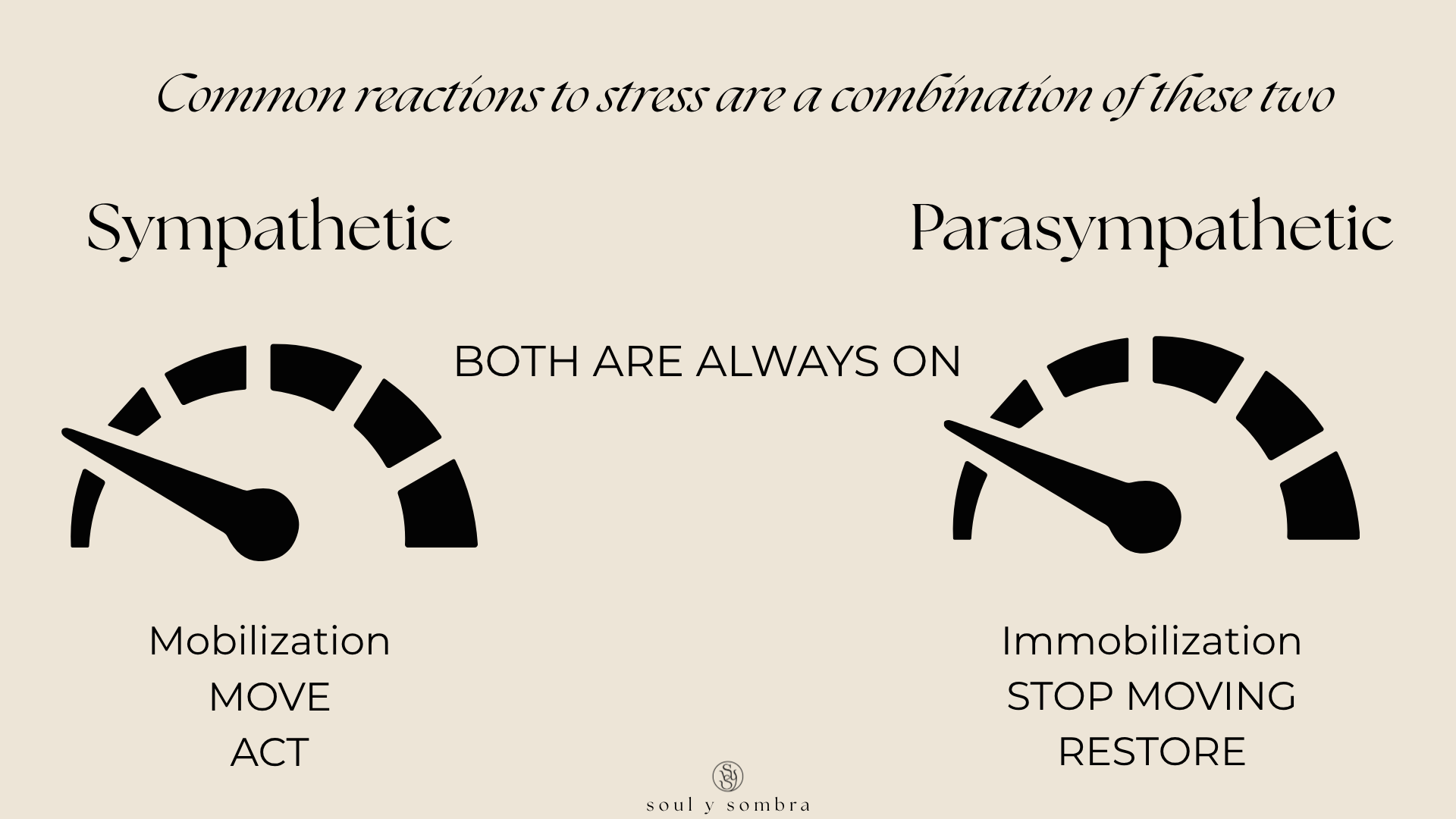
Your autonomic nervous system runs on two gears: activation (mobilization, sympathetic) and deactivation (immobilization, parasympathetic), and neither one is good or bad. Both show up in your best moments and your hardest ones; it's not sympathetic equals stress and parasympathetic equals calm. Under stress, these gears show up as fight, flight, freeze, fawn, or shut down, and they can blend together or switch quickly, though sometimes a pattern locks in and becomes a common response.
-

Somatic Foundation
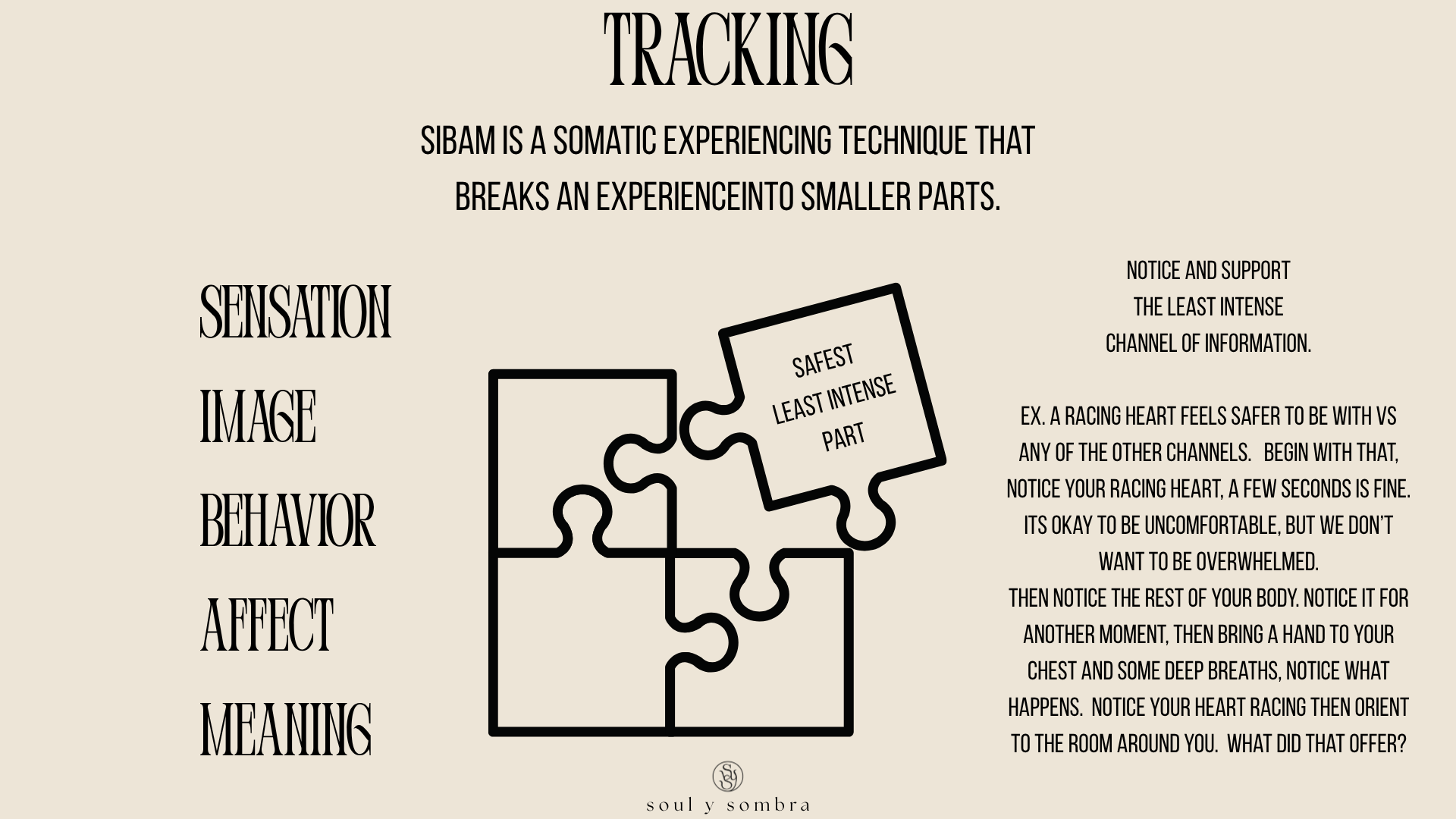
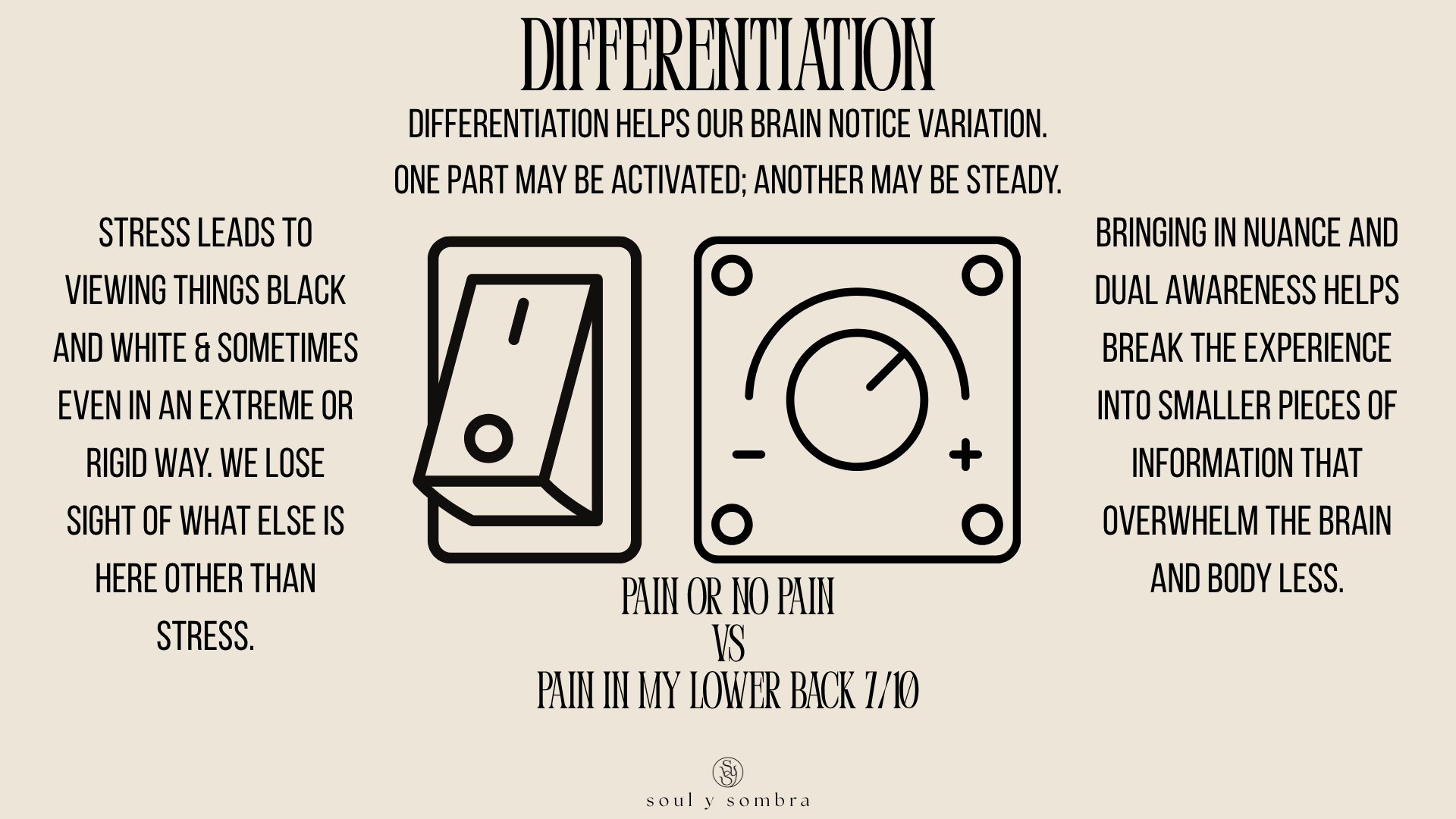
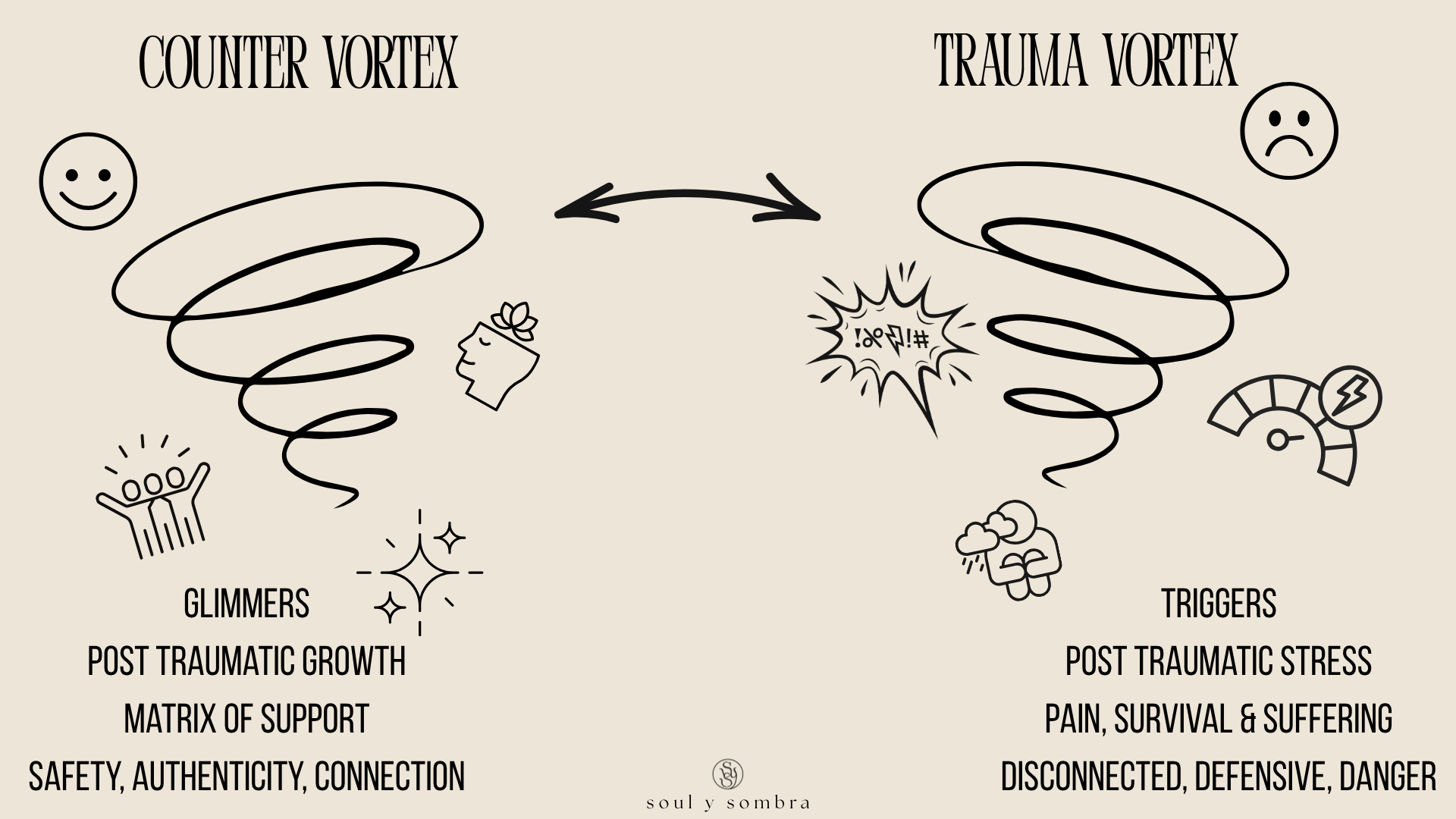
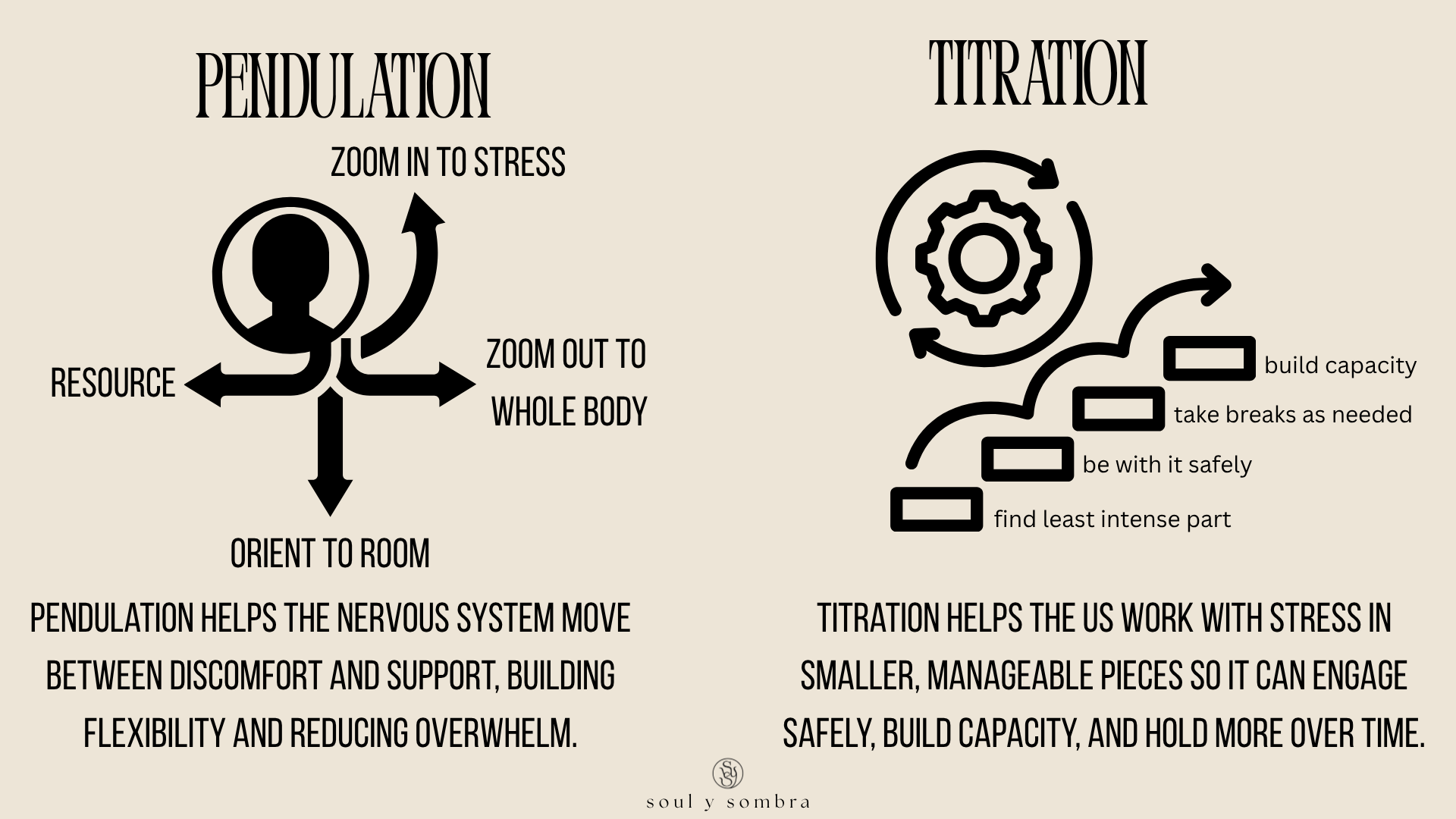
The somatic foundation comes down to six moves: moving your awareness in and out of the body, and tracking activation, deactivation, and settling as they happen (SIBAM can help you notice the signals). Differentiation matters here too, adding more detail and nuance to what you're noticing actually makes it easier for your nervous system to metabolize the experience rather than staying stuck in it. From there, you're learning to recognize which way you're being pulled (the trauma vortex or the counter vortex), practicing pendulation between stress and safety, and titrating the dose so your system can integrate it instead of getting overwhelmed.
-

Supporting Capacity
Capacity isn't fixed, it expands and contracts based on what your nervous system has access to, which is why keeping an eye on your body budget matters: you have to give yourself experiences of safety repeatedly and consistently for capacity to actually grow. That can look like micro-rest, slowing your pace down, co-regulation, rhythmic movement like dancing or exercise, or whatever genuinely resonates for you. Whatever you repeat, you reinforce, and your nervous system gets efficient at exactly that, so the goal is repeating the patterns that build you up, not the ones that keep you stuck.
Predictive Processing

Make a list: What predictions is your body running right now, and where did they come from?
(Examples to get you started: "I predict conflict will end in abandonment. I learned this after my parents' divorce." "I predict rest is dangerous. I learned this growing up in a house where stopping meant falling behind." "I predict my voice won't matter. I learned this in a relationship where speaking up cost me something.")
Questions:
Which of these predictions was accurate once, but isn't anymore, what changed?
If your body could tell you exactly what it's trying to protect you from with this prediction, what would it say?
How might this prediction actually be saving your body energy, even if it doesn't feel helpful?
Autonomic Nervous System

Make a list: What does each stress response actually look like in your specific life, not the textbook definition, your version?
There is a stress response cheat sheet below*
Questions:
Which response do you judge yourself for the most, and what would it mean to see it as intelligent instead?
Whose nervous system did you learn this pattern from?
-
What It Feels Like: Heat, tension, jaw/fists clenching, heart racing
What It Looks Like: Snapping, arguing, controlling, irritability, needing to fix or win -
What It Feels Like: Restlessness, racing thoughts, tight chest, can't sit still
What It Looks Like: Overworking, avoiding, staying busy, leaving the room/conversation -
What It Feels Like: Numb, foggy, heavy, disconnected from body
What It Looks Like: Stuck, can't decide, can't start, going blank mid-task or mid-sentence -
What It Looks Like: Smiling, stomach drop, urge to smooth things over
What It Feels Like: “People-pleasing”, over-apologizing, agreeing before checking in with yourself, difficulty saying no, difficulty identifying or prioritizing needs and preferences
-
What It Feels Like: Flat, exhausted, far away, low energy
What It Looks Like: Withdrawing, disconnecting, going through the motions, hard to feel anything
Somatic Foundational Tools

Make a list: When have you already used one of these six skills without knowing what to call it?
(Examples: "I paused and took a breath before responding in an argument — that was pendulation." "I noticed my chest was tight before I even knew I was anxious — that was tracking." "I took a five-minute walk instead of trying to process the whole thing at once — that was titration.")
Questions:
Which skill do you already lean on in daily life, and where could you use it more deliberately?
What happens in your body when you try to differentiate, to notice more detail to break it down to process more easily than one thing at once, instead of collapsing into just one feeling?
-
The trauma vortex is the pull toward the hard, activating material: the memories, sensations, and stories that spiral you further into distress. The counter vortex is the pull toward resource, ease, and safety. Naming which vortex you're in helps you recognize you have a choice about where to rest your attention, rather than getting swept along automatically.
-
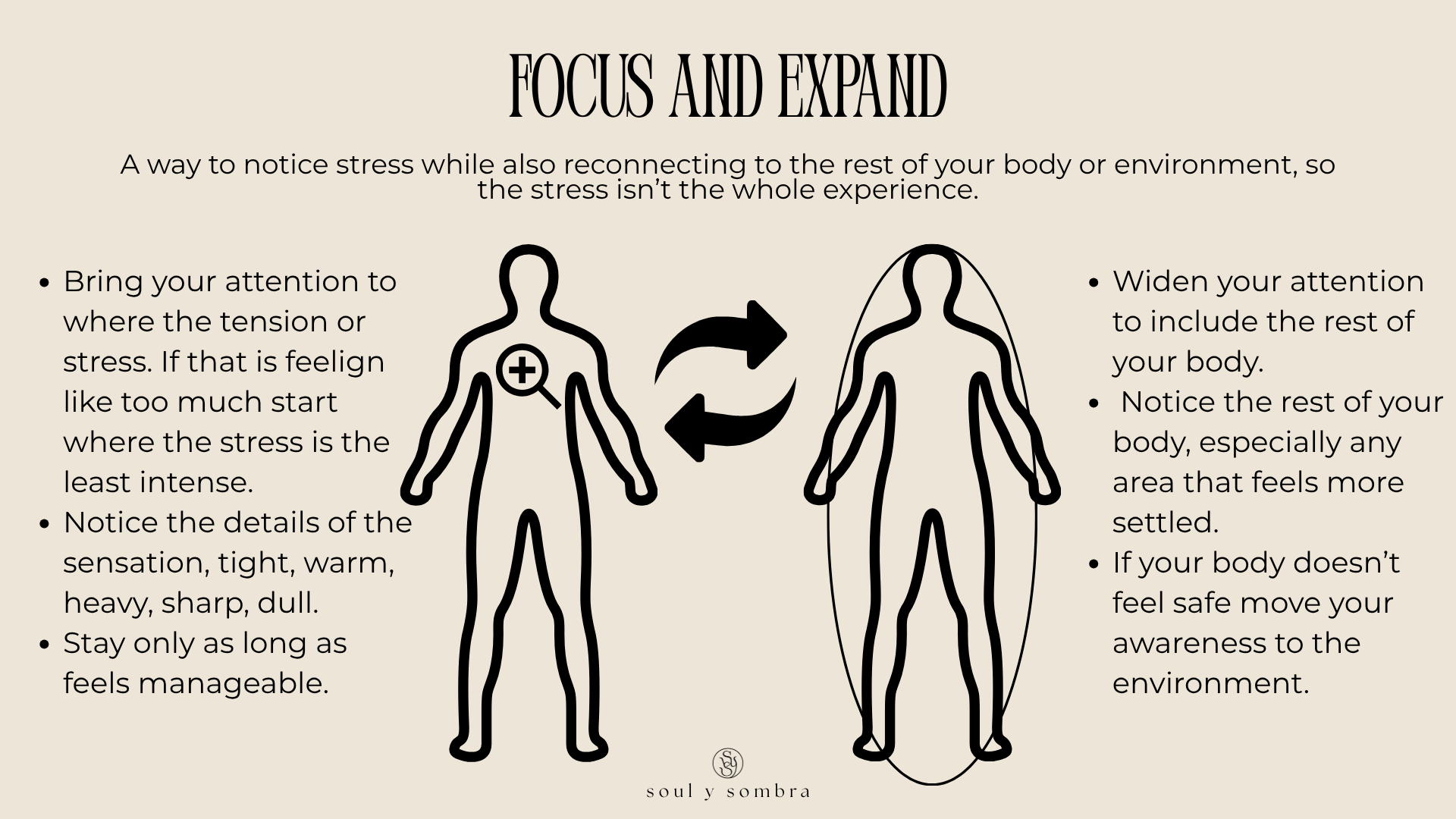
The rhythm of moving back and forth between stress and safety, contraction and expansion. You start with small pendulations, brief moments of noticing stress, then briefly returning to something steadier. Over time you build the capacity for bigger swings, staying with either state a little longer without getting stuck. This is how your system learns it can move through discomfort instead of being flooded or frozen by it.
-
Working with an experience in small, manageable doses instead of all at once. Just like adding a substance drop by drop rather than dumping it in, titration means approaching stress or activation in pieces your system can actually digest; a little sensation, a little pause, a little more. This supports you so you build tolerance without overwhelming your capacity.
-
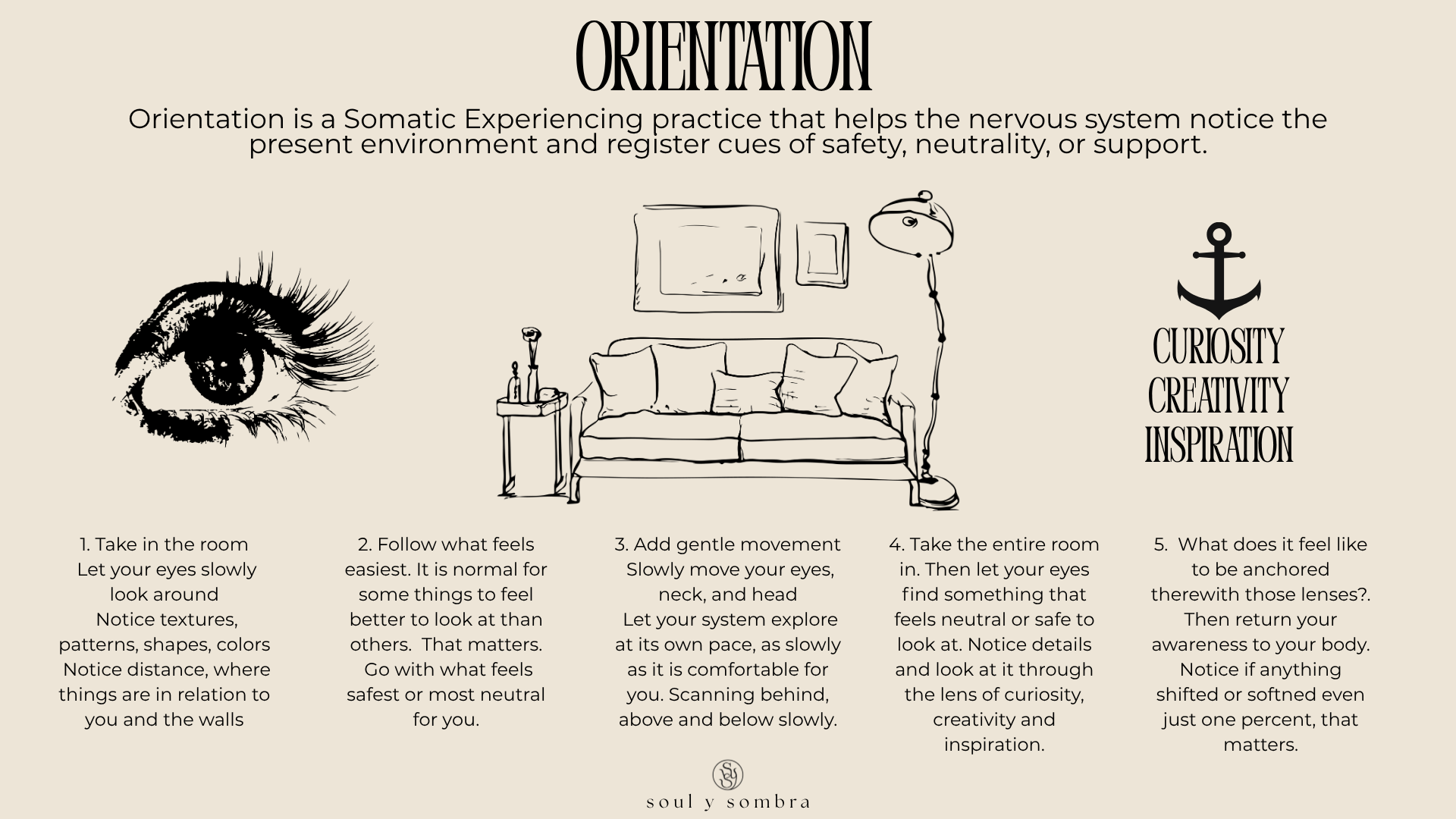
Shifting your attention in and out of the body. Orienting to the environment is especially helpful to reconnect to the present moment, the environment and neutrality around you. It is also helpful to move your awareness between where there's intensity in your body and where there's none.
-
Noticing the small signals of activation, like a racing heart or deactivation, like feeling numb or checked out. ANd most importantly it is helpful to notice settling or safety coming back online. Using SIBAM may also be helpful (Sensation, Image, Behavior, Affect, Meaning) to guide what you're tracking.
-
Recognizing that more than one thing can be true at once (dual awareness), and moving out of black-and-white thinking into the shades of grey in between. Rating your pain or discomfort on a scale, rather than treating it as all-or-nothing, can help you find that nuance. Noticing the edges of the stress or discomfort, "where does this lessen?", can also help your system not get stuck on high intensity. The goal with differentiation is to be able to give your nervous system more information. For example, “I’m angry”, turns into I feel heat in my belly and it is a 6/10 but I don’t feel it in my chest.
Supporting Capacity

Make a list: When has your body actually shown you it has capacity, even a small moment where you stayed with something hard, or came back to steady afterward?
(Examples: "I felt anxious before a hard conversation, but I stayed in the room instead of leaving." "I had a stressful day, but I noticed I was able to fall asleep that night." "I felt overwhelmed and took a five-minute walk, and it actually helped.")
Questions:
Is what you're doing right now building your capacity, or just helping you tolerate and what's the difference for you?
What's one deposit into your body budget you could make more often, even in a small way?
Want further support integrating this experience?
If you've been enjoying the material from THE INTRODUCTION, consider next week’s group, THE INTEGRATION. This is where it gets to move from concept into practice. This is the space to actually work with your nervous system in real time, with support. Enrollment closes 7/28, so if you've been on the fence, this is your sign.
Already booked? Come prepped.
If you want to get the most out of practicing the skills together, spend a few minutes before we meet thinking of two real scenarios from your own life:
Something low-level — a small, everyday stressor. Traffic. A vague text that gets your mind racing. A long checkout line. Something that mildly activates you but doesn't take you far from baseline.
Something moderate — a bit more charged. A hard conversation you're dreading, a decision you've been avoiding, a relationship dynamic that gets under your skin.
Bring both with you, this will be just for you so don’t worry about sharing. We'll use them to practice moving awareness, tracking, differentiation, pendulation, and titration, with real material, not hypotheticals. The more specific your scenarios, the more useful the practice.

Somatic Wisdom for All
Found this helpful? Share your thoughts below.
SLIDES